 Log in


"I woke up drenched in sweat this morning, I wonder why?" "Even in winter, my futon feels stuffy." Everyone must have felt this at some point. It's strange to sweat so much even without exercising, isn't it?
However, night sweats are something everyone experiences without realizing it, and there's nothing abnormal about them.
So, how much do people sweat in their sleep? This time, we'll explain the reasons why you might experience severe night sweats in summer and winter.
1. Everyone sweats in their sleep, regardless of summer or winter!?

Everyone sweats in their sleep. While the amount of night sweats varies depending on the season, age, and sleep environment, a certain amount of night sweats is normal.
In summer, when the temperature and humidity are high, it's easy to feel yourself sweating in your sleep, but in winter, it can be difficult to tell if you're sweating or not.
So, how much do people sweat?
1-1. The amount of night sweat is about one cup! Night sweats are not related to summer or winter.

While the amount of night sweat varies from person to person, it is said to be about one cup.
Let's consider one cup to be approximately 200ml. While it's not constant every day of the year, it's a good estimate to keep in mind.
During the hot summer months, the amount of night sweat can increase to 500-600ml. 500ml is equivalent to one plastic bottle, so you can see that it's a considerable amount.
This is why you tend to sweat heavily in your sleep during the summer. By the way, it's said that you sweat about 200ml during a one-hour commute and 1,400ml during one hour of exercise, so you can see that the amount of night sweat is surprisingly high.
1-2. The amount of night sweat varies with age and gender.

While the amount of night sweat changes with the season, it also changes with age and gender. If you feel that your night sweats have become severe even in winter, age or other factors may be involved.
The feeling that night sweats worsen with age may be due to the body's systems losing function as a result of aging.
However, it cannot be generalized that aging is the sole cause, so it should only be considered as one of the possible reasons.
Looking at gender, men tend to sweat more in their sleep than women. This is because men generally have a higher basal body temperature. As a result, they tend to sweat more in their sleep than women.
For both men and women, the back tends to be the area where they sweat the most during sleep.
1-3. Unknowingly controlling night sweats with shampoo and antiperspirants.

In recent years, the functionality of shampoos and antiperspirants has improved, making them capable of addressing night sweats.
These products are designed to prevent discomfort even when sweating, rather than reducing the amount of sweat itself. Therefore, even if the actual amount of night sweat remains the same, it becomes less bothersome.
If you feel like you don't sweat much in your sleep, it could be that you've been unknowingly controlling it with shampoo or antiperspirants. While the amount of sweat you produce is important, if you want to have a comfortable sleep, it's a good idea to use these products.
2. What exactly causes night sweats in both summer and winter?

We will explain the typical causes of night sweats.
- Due to the body's structure
- External causes in the sleep environment
- Autonomic nervous system issues
- Hormonal imbalance
- Possibility of illness
In addition to these, stress and alcohol can also be contributing factors. Let's look at each in detail.
2-1. Body temperature is lowered by sweating during sleep.

During sleep, the body's temperature steadily decreases. The heat is released through the extremities of the hands and feet. This is why it's advisable not to wear socks when sleeping.
To lower body temperature, it is important to release heat, and night sweats also play a role in this. The principle is the same as sweating during exercise: sweating helps cool the body by releasing moisture.
So, sweating in your sleep, regardless of summer or winter, is a natural phenomenon.
2-2. The sleep environment itself is not appropriate.

While it's not a problem to sweat naturally in your sleep, if you're sweating in your sleep because your sleep environment isn't appropriate, then improvements are necessary.
A typical example is sleeping without using air conditioning during the hot summer months. While it's now widely known that it's better to sleep with air conditioning on, in the past, information circulated that it was better to turn off the air conditioning before going to sleep.
Due to the high room temperature, the amount of night sweats increases, and if the body cannot cool down quickly enough, it can lead to heatstroke, so try to sleep in a comfortable environment without overexerting yourself.
Tips for a comfortable sleep even on hot summer nights! Learn to cope with humidity and night sweats.
Conversely, in winter, the amount of night sweats increases if you sleep with an electric blanket or wear too many clothes. Try using a hot water bottle instead of an electric blanket, or adjust your bedding to create a better sleep environment.
2-3. Autonomic nervous system imbalance leading to impaired body temperature regulation.

Anxiety caused by stress or other factors, an imbalance in the autonomic nervous system is one of the causes of severe night sweats.
The autonomic nervous system cannot be controlled by your own will, so it is difficult to be aware of it, but it is greatly related to night sweats. Normally, during sleep, the parasympathetic nervous system becomes dominant, and the body transitions to a relaxed state.
However, when the autonomic nervous system is imbalanced, the sympathetic nervous system can become dominant, which activates the sweat glands. This is often caused by stress, tension, and anxiety, so try to relax with night routines or other methods.
2-4. Hormonal imbalance.

Hormonal imbalance is also related to night sweats.
The increase in night sweats due to aging, as mentioned earlier, is also largely due to hormonal imbalance. This is what is known as menopause.
In addition, women tend to experience more night sweats before menstruation. Hormone secretion is regulated by the hypothalamus in the brain, which also regulates the sympathetic nervous system, as mentioned earlier. Therefore, it is known that an imbalance in hormones can also disrupt the balance of the sympathetic nervous system.
Furthermore, before menstruation, basal body temperature rises by about 0.5 degrees Celsius. These factors combined cause an increase in night sweats in both summer and winter.
2-5. Severe night sweats may be a sign of illness.

If you're experiencing severe night sweats regardless of the season, there's a possibility of an underlying medical condition.
Hyperhidrosis is a possible condition. While it differs between localized and generalized hyperhidrosis, it is recommended to consult a doctor. If you have hyperhidrosis, it will naturally increase the amount of night sweats you experience.
Other conditions such as hyperthyroidism (Graves' disease) and diabetes can also be related, so if you experience severe night sweats for a prolonged period, consult a specialist.
3. Excessive night sweats disrupt sleep and degrade sleep quality.

Excessive night sweats degrade sleep quality. While normal amounts of night sweats can improve sleep quality, a large amount of night sweats is a different story. Sleep quality declines as night sweats cause you to wake up in the middle of the night or make your sleep shallow due to discomfort.
One day of this may not have much impact, but if this continues, it can lead to chronic sleep deprivation.
If lack of sleep makes you irritable or causes problems at work or school, that stress will further degrade your sleep quality. This creates a vicious cycle, so it's best to resolve night sweats as soon as possible.
4. Because of night sweats, pillows and futons are prone to odors.
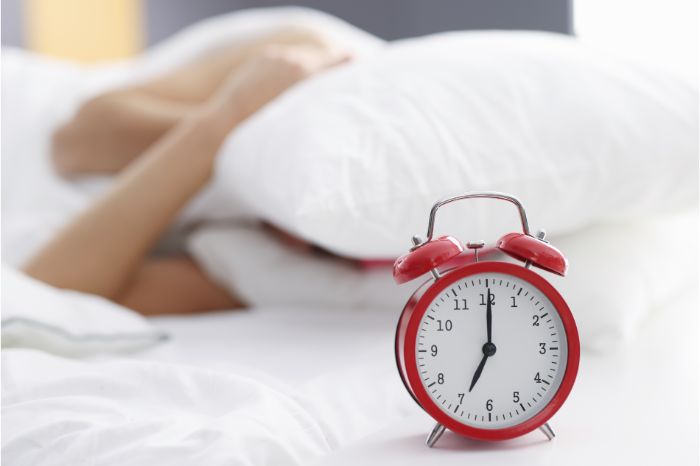
In addition to decreased sleep quality, odor can also be a problem. Even though you sweat in your sleep, pillows and futons are rarely cleaned.
Sweating 200ml a day and using them daily makes them prone to odors.
While you wash your workout clothes on the same day, you only wash or air your pillows and futons about once a week or even less frequently. Naturally, odor components accumulate, so remember to clean them regularly.
5. 7 easy tips for comfortable sleep to prevent night sweats for everyone.

Some people want to improve severe night sweats, right? So, the Sleepedia editorial department has narrowed down 7 ways to deal with night sweats that can be used in both summer and winter.
We've picked out things that are easy to do, so let's try them starting tonight.
5-1. Shampooing before bed to prevent scalp odor.

Even with night sweat countermeasures, it's difficult to completely stop sweating in your sleep. However, when you wake up in the morning, you want to avoid your scalp smelling due to night sweat, right?
Actually, you can prevent scalp odor from occurring in advance by using your bath time before bed.
You can also try using shampoos that target the cause of scalp odor!
5-2. Re-evaluate and adjust your lifestyle.
By regulating your lifestyle, you can help your autonomic nervous system function normally.
To do this, it's recommended to start by fixing your sleep and wake times. By keeping your internal clock accurate and allowing yourself plenty of time in the morning, you can create a daily routine that reduces stress.
Additionally, if you expose yourself to the morning sun and pay attention to your diet, your lifestyle will naturally become more regulated!
5-3. Drink a glass of water before bed.

Drinking a glass of water before bed is also effective.
By staying hydrated before sleep, you can expect to produce smoother sweat. Sticky sweat tends to cause discomfort and can hinder sleep. If you allow yourself to produce smooth, easily evaporated sweat, you'll be free from such worries.
Also, sweating means you lose at least some minerals. Water is effective, but it's also effective to replenish minerals with a diluted sports drink or similar.
Replenishing minerals also helps prevent heatstroke and muscle cramps!
5-4. Relax as much as possible before going to bed.
Try to relax before going to bed. By letting the parasympathetic nervous system take over before falling asleep, you can fall asleep smoothly. Listening to soothing music, diffusing essential oils, or stretching are all good options.
Just do whatever you find relaxing. Incorporating these activities into a nighttime routine can also be effective, so gradually try to ritualize your evening actions.
You might not see immediate results, but you'll feel the effects if you keep at it!
5-5. Try to keep your head as cool as possible.

By keeping your head as cool as possible during sleep, you can fall into a deeper sleep more easily. Also, a cool head helps lower your body temperature, which can prevent excessive night sweats.
Of course, avoiding covering your head with blankets is important, but paying attention to your pillow can also be effective.
Try using a breathable pillow, or a cooling pillow like a water pillow.
5-6. Review your bedroom and bedding to create a comfortable sleep environment.
By reviewing your bedroom and bedding, you can significantly reduce night sweats.
First, let's review your air conditioner and heater. By maintaining a comfortable room temperature, night sweats will dramatically decrease.
It's also important to use bedding that doesn't trap heat. If you experience severe night sweats in winter, consider how you arrange your blankets.
As mentioned earlier, your pillow is also a crucial item that greatly affects night sweats. You'll likely find many areas for improvement by taking a fresh look at your bedroom and bedding.
5-7. Improve your diet to eliminate unpleasant components in your night sweat.

By changing your diet, you can not only reduce night sweats but also eliminate unpleasant components from them.
Specifically, by reducing your intake of junk food, the composition of your sweat changes, and odors are reduced.
If you often eat spicy food at night, you should cut back on that as well. Capsaicin, found in chili peppers, has diaphoretic properties.
Eating it before bed may have an effect even while you're sleeping, so try to avoid it as much as possible.
Summary: Get along well with night sweats, regardless of summer or winter!

You sweat in your sleep regardless of summer or winter. If it's normal night sweating, there's no need to worry, but severe night sweating can be a concern.
Let's summarize the article here.
- Night sweats occur all year round, regardless of summer or winter, and the amount is about one cup (about 500ml in summer).
- The amount of night sweats varies with age and gender.
- Severe night sweats are related to hormonal imbalance and the autonomic nervous system.
- Severe night sweats can lead to sleep deprivation and body odor.
- There are many easy ways to deal with severe night sweats, such as drinking water before bed.
While it can be difficult to determine if you're sweating excessively in your sleep, if you notice a significant difference from before, it's advisable to consult a specialist.
If there's nothing wrong, that's fine, but sometimes illnesses can be involved. Take this opportunity to reflect on how much you typically sweat in your sleep.


