Log in


Have you ever wondered, "Is it true that many great historical figures were short sleepers?" or "How did these great people sleep?" It's certainly understandable to admire the idea of being a short sleeper, as it would free up more time. One might also think that these historical figures achieved so much because they were active during the hours others spent sleeping.
However, in reality, very few people are true short sleepers. While we hear that historical figures slept for short periods, were they truly short sleepers?
This article will explore the characteristics and sleep duration of short sleepers, investigate whether many socially successful historical figures were indeed short sleepers, and introduce the sleep methods they employed.
What is a Short Sleeper?

A short sleeper, also known as a "short-duration sleeper," is someone who can function normally with minimal sleep. Here, we'll define what a short sleeper is and explore its causes.
Definition and Sleep Duration of a Short Sleeper
A short sleeper refers to an individual who can achieve sufficient rest with a shorter amount of sleep than the average person.
Generally, a short sleeper is defined as someone who sleeps less than 6 hours per night on average but experiences no health issues such as daytime sleepiness or fatigue.
Factors Contributing to Becoming a Short Sleeper
Although the cause of being a short sleeper has not been definitively identified, it is believed to be genetic. Short sleepers are said to have specific genetic mutations related to sleep, which allow them to maintain good health even with shorter sleep durations.
Additionally, individual differences in neurotransmitter function in the brain and the regulation of the body's internal clock also seem to play a role.
On the other hand, sleep duration can also be shortened by various factors such as insomnia, depression, physical illnesses, and the effects of medication, which must be distinguished from true short sleepers.
According to research by a group at the University of California, true short sleepers are a very small minority, accounting for about 4 in 100,000 people. In Japan, 5-8% of the population is said to be short sleepers.
Characteristics of Short Sleepers

Short sleepers typically don't feel tired even with less than 6 hours of sleep and tend to be energetic during the day. Furthermore, according to research published by the University of California, San Francisco in August 2019, short sleepers are better at multitasking compared to the general population.
In other words, short sleepers are characterized by being active and highly focused despite their short sleep duration. Below, we'll delve into the differences between short sleepers and those with insomnia or long sleepers, all of which relate to sleep.
Difference Between Short Sleepers and Insomnia
Short sleepers and individuals with insomnia both sleep for short durations, but there is a significant difference between them. Short sleepers, due to their natural constitution, can function without hindrance during the day even with less than 6 hours of sleep, and tend to be more energetic.
Short sleepers may exhibit the following characteristics:
- Even with less than 6 hours of sleep, they wake up naturally without an alarm clock and do not feel daytime sleepiness.
- They do not require long hours of sleep even on holidays.
- Short sleep duration does not affect their creativity, intellect, or ability to act.
- They have been short sleepers since childhood or adolescence due to their natural constitution.
- They never take naps or doze off.
On the other hand, there is also a condition called "insomnia," which also involves short sleep duration. Insomnia is a sleep disorder characterized by difficulty falling asleep, waking up in the middle of the night, or waking up too early, leading to daytime discomfort.
The major difference is that short sleepers are getting the amount of sleep they need, while insomniacs are experiencing a lack of sleep quality or quantity.
Furthermore, according to the Ministry of Health, Labour and Welfare's e-Health Net, "if insomnia becomes chronic, it may be difficult to recover without appropriate medical treatment."
Difference Between Short Sleepers and Long Sleepers
Long sleepers are individuals who, due to their constitution, require more than 10 hours of sleep, which is longer than the average sleep duration. Similar to short sleepers, the cause is not clearly understood. However, genetic factors are believed to be involved.
Although long sleepers are categorized as having a sleep disorder, it is not necessarily an illness, and they often experience no daytime sleepiness or fatigue even after long hours of sleep.
Also, while short sleepers tend to be outgoing, long sleepers often have introverted personalities and are prone to constant worries.
For more detailed information on long sleepers, please refer to the following:
>>>Am I a long sleeper? Characteristics, causes, diagnosis, and remedies
Lifespan and Health Impact of Short Sleepers?

Normal individuals who sleep only 5 hours experience sleep deprivation, which can lead to sleep disorders if it continues. However, true short sleepers are said to wake up feeling refreshed even after 3-4 hours of sleep, with no adverse health effects.
The reason why short sleepers don't experience negative health effects is because of their "inborn constitution." Short sleepers, due to specific genetic mutations, wake up feeling refreshed even with short sleep durations of less than 6 hours, and their mental function and daytime sleepiness are unaffected.
In the case of short sleepers, the quality of their sleep is high, and their internal body clock functions properly, which is believed to reduce the risk to their health and lifespan.
Is it true that many great historical figures were short sleepers?
Many people are curious whether it's true that many great historical figures were short sleepers.
If one is a short sleeper, they have more active hours, and thus can accomplish more. Therefore, many might assume it's natural for them to achieve greater accomplishments and succeed socially.
To conclude, it is said that many great historical figures had short night sleep durations. However, this does not necessarily mean they were short sleepers.
While there are many stories about short sleepers among great historical figures, there is little concrete evidence to support them.
Even Napoleon, famous for being a short sleeper, is now believed by recent research to have slept in segments.
The more you investigate, the more interesting the sleep habits of great historical figures become. Let's compare the sleep patterns of ancient great figures with those of modern ones.
Compare the Sleep Habits of Great Historical Figures
Let's compare the actual sleep durations of great historical figures, from ancient times to the present. Among ancient figures, Napoleon and the inventor Edison are famous for their sleep-related anecdotes.
Among modern figures, Amazon founder Jeff Bezos is often mentioned. It will be interesting to see the results.
So let's dive in.
- Revolutionary "Napoleon Bonaparte"
- Inventor "Thomas Edison"
- Artist "Leonardo da Vinci"
- Amazon Founder "Jeff Bezos"
- Microsoft Founder "Bill Gates"
- Genius Entrepreneur "Elon Musk"
- Comedy Icon "Akashiya Sanma"
Revolutionary "Napoleon Bonaparte": 3 Hours
Napoleon Bonaparte, the French revolutionary, is famous for sleeping only 3 hours. He was known as a hardworking individual who increased his active hours by sleeping less and managed to accomplish numerous tasks.
There is also an anecdote that he compensated for the lack of sleep by sleeping while riding his horse.
Furthermore, recent research shows that in addition to 3 hours of sleep, he also took naps. He reportedly took short naps on horseback, between meetings, and even in the bath.
This means his total daily sleep was more than 3 hours.
Since his total daily sleep time is unknown, we cannot definitively say whether he was a short sleeper, but in reality, he may have simply divided his sleep, taking naps in addition to his nighttime sleep.
Inventor "Thomas Edison": 4 Hours
Thomas Edison, known as the King of Inventors, was also believed to be a short sleeper. He reportedly said that he "felt ill if he slept for more than 4 hours," suggesting his sleep duration was less than 4 hours.
However, like Napoleon, there is a theory that he also took naps. In Edison's case, he reportedly took multiple naps of about 1-2 hours to compensate for insufficient sleep.
Considering this, his earlier statement might have meant, "I can't sleep continuously for more than 4 hours." Edison, who would often work through the night researching, is said to have managed his sleep in this way.
While this might seem like an unusual sleep method by conventional standards, it's a fact that there are people who actually practice something similar. He, too, seems to have split his sleep.
Artist "Leonardo da Vinci": 90 Minutes
Leonardo da Vinci, known for "The Last Supper," is also considered a short sleeper.
His sleep duration was reportedly a mere 90 minutes!
This is the shortest time mentioned so far. What's interesting is that instead of taking a single 90-minute sleep, he reportedly slept for about 15 minutes every 4 hours.
Since there are 24 hours in a day, 15 minutes x 6 = 90 minutes.
It's a very short amount of time, but was it really enough? If it didn't affect his health, he might truly have been a short sleeper.
However, typically, 15 minutes of sleep is merely a nap to temporarily recover from fatigue.
If this was indeed a nap, it could be considered a "power nap." We will explain power naps later.
Amazon Founder "Jeff Bezos": 7 Hours
Many great historical figures were apparently short sleepers, but what about modern-day figures?
Jeff Bezos, the founder of Amazon, which has become an indispensable part of our lives, sleeps for 7 hours. He follows a typical early-to-bed, early-to-rise rhythm, going to bed at 10 PM and waking up at 5 AM.
This now falls into the category of a general sleep duration. In one interview, he even emphasized the necessity of 8 hours of sleep, indicating that he is not a short sleeper.
Perhaps sleeping well and working hard is the secret to success.
Microsoft Founder "Bill Gates": 7 Hours
Microsoft founder Bill Gates, like Jeff Bezos, also sleeps for 7 hours.
He seems to go to bed around midnight and wake up around 7 AM. While not an early bedtime, he ensures he gets sufficient sleep.
During the early days of Microsoft, he worked exceptionally hard, to the extent that those around him were concerned about his health.
However, 7 hours of sleep is a common duration. While it's unclear when Bill Gates realized the importance of sleep, it's evident that he prioritizes getting enough rest.
Genius Entrepreneur "Elon Musk": 6 Hours
Elon Musk, known as a genius entrepreneur worldwide, sleeps for about 6 hours.
This is slightly shorter than the two individuals mentioned earlier. He follows a rhythm of going to bed at 1 AM and waking up at 7 AM.
However, while Elon Musk's sleep duration may not be long, he is said to avoid caffeine consumption several hours before bedtime.
This allows him to achieve high-quality sleep, enabling him to recover from fatigue even with 6 hours of rest. He might be maintaining an ideal lifestyle by meticulously managing his time and maximizing its use.
Musk considers sleep to be important and makes sure to get enough sleep despite his busy schedule. His thorough self-management is an admirable trait.
Comedy Icon "Akashiya Sanma": 3 Hours
While we've looked at great figures from around the world, Japan also has its own. Akashiya Sanma, a titan of the comedy world, is famous for sleeping only 3 hours.
He claims he has been able to function perfectly fine with 3 hours of sleep since he was young.
If this amount of sleep is sufficient for him, he might truly be a short sleeper. Apparently, no one around him has ever seen him asleep.
Even his own daughter, IMALU, says she has never seen him sleeping.
It makes one wonder if he takes naps in addition to his 3 hours, or if he is truly a short sleeper.
Nap Methods Practiced by Great Historical Figures!
While many modern great figures seem to prioritize getting sufficient sleep, it appears that many historical figures, despite being associated with short sleep durations, actually adjusted their sleep with naps.
However, haven't you ever found yourself sleeping too much even when you intended to just take a nap?
Therefore, here are some napping methods actually practiced by great historical figures.
Power Nap: A Nap of Approximately 15-30 Minutes
One napping method is called "power napping."
A power nap is a short nap lasting approximately 15 to 30 minutes. If Leonardo da Vinci's 15-minute sleep was a nap, it could be considered a power nap.
The U.S. National Aeronautics and Space Administration (NASA) has reported that a 26-minute nap can improve pilot performance by over 30%. *1
It has been found that incorporating power naps can increase work efficiency, and global companies such as Google, Apple, and Microsoft have increasingly adopted nap spaces in their offices or utilized sleep devices.
Napping has the effect of temporarily relieving "sleepiness" and "fatigue." To boost your work efficiency in the afternoon, why not try a power nap during your lunch break?
Micro Nap: A Nap of Tens of Seconds to 1 Minute
A "micro nap" refers to a nap lasting from tens of seconds to about 1 minute, even shorter than a power nap.
While it might seem too short to be called a nap, many of you might have experienced feeling refreshed just by closing your eyes. Even simply ceasing to take in visual information allows the brain to recover.
This is recommended when you "don't have enough time for a power nap but want to reduce fatigue."
Also, it can be done in short periods, such as during train or taxi rides, so it might be a good idea to try a micro nap instead of using your smartphone.
By taking a micro nap, even closing your eyes for a minute can provide a refreshing effect and help regain composure.
Holiday Nap: Approximately 90 Minutes of Sleep
A "holiday nap" is a method of sleeping extra on holidays when you have more time.
Although scientifically it's said that you cannot "store up" sleep, it is believed that you can make up for lost sleep. In other words, sleep cannot be "saved," but "debt can be repaid." Edison, mentioned earlier, might have practiced a similar sleep method.
However, sleeping too much can disrupt your biological rhythm, so try to limit it to about 2 hours at most.
If you sleep more than 2 hours longer on weekends than on weekdays, it is considered that you have accumulated "sleep debt."
It is known that it takes more than two weeks to repay sleep debt, so try to increase your weekday sleep time.
Forcing Yourself to Sleep Less Is Not Good

It is believed that true short sleepers, who can function without their lives being affected by short sleep, are extremely rare in modern times.
A short sleeper is someone who, due to their innate constitution, has had short sleep durations since childhood or early adulthood yet experiences no health issues such as daytime sleepiness. However, such individuals are very rare.
And "you don't become a short sleeper by simply shortening your sleep time." Forcing yourself to sleep less can lead to insufficient sleep, which in turn can reduce your performance.
Many may aspire to be short sleepers, who can increase their active hours by sleeping less. However, for most people, shortening their sleep time actually leads to increased fatigue and decreased concentration.
If you can only get a short amount of sleep, it's important to improve the quality of your sleep. Instead of forcing yourself to sleep less, aim for high-quality sleep.
[References]
*1 Power Naps (Active Napping) Can Improve Life Performance
*2 The Old-Fashioned Marble-Drop Power Nap Method Practiced by Einstein and Edison
If You Want to Improve Your Sleep Quality Even with Short Sleep! Check Out Recommended Items
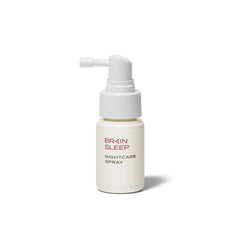
Brain Sleep develops a variety of bedding tailored to our customers' sleep needs and concerns. Here, we introduce the features and highlights of our recommended items.