
 Log in


Many people probably struggle with shallow sleep due to consecutive tropical nights or waking up in the middle of the night because of the intense heat, unable to get a good night's rest. It's so hot that you've completely given up. So, how can you sleep comfortably even on hot nights?
Even on restless nights, the key to a good night's sleep is to skillfully use air conditioners and fans to adjust room temperature and humidity, take measures against moisture, and prevent sticky night sweats as much as possible.
This time, we will introduce tips for sleeping comfortably even in the hot summer to solve the problem of summer insomnia.
By reading this article to the end, you will surely learn how to get quality sleep!
Through this article, let's learn about the relationship between temperature, humidity, and sleep, and the causes and solutions for night sweats, to effectively relieve summer insomnia stress.
1. Why is it so hard to sleep on tropical nights? Causes of decreased sleep quality
Japanese summers, with consecutive tropical nights, are restless and contribute to a decrease in sleep quality.
For deep sleep, the body's core temperature needs to naturally decrease. However, in hot summer, the core temperature is difficult to lower, leading to a decrease in sleep quality.
In addition, the reasons for poor sleep are not only high temperatures, but also discomfort from bedding getting sticky with sweat, and difficulty in adjusting fans and air conditioners, among other things.
If you don't get enough good sleep due to the heat, it can interfere with your daily life, so caution is necessary.
The cause may be that the indoor temperature and humidity settings are not properly adjusted, preventing the body from regulating its temperature for sound sleep. It's not just a matter of turning on the air conditioner or fan and going to sleep.
Skillfully use air conditioning and fans to ensure your core body temperature naturally drops at night, allowing for deep sleep. Adjusting air conditioning and fans is also important to avoid overcooling your body.
Create an appropriate indoor temperature environment and avoid health problems caused by overcooling your body. In addition to the room's temperature environment, re-evaluate your perception of bedding and sleepwear to improve your summer insomnia.
1-1. If you wake up in the morning drenched in sweat, pay attention to humidity!

Everyone has probably experienced waking up in the morning with their pajamas and bedding drenched in sweat, having perspired heavily during sleep.
Humans sweat during sleep, regulating their body temperature by evaporating moisture from their bodies.
If you're sweating, uncomfortable, and can't fall asleep, or if you wake up feeling sluggish in the morning due to dehydration from excessive sweating, adjusting the humidity will help you sleep better.
To ensure a comfortable night's sleep, use a hygrometer and adjust your air conditioner to maintain room humidity between 50% and 60%.
1-2. Adjust to a comfortable temperature for sleep!
To achieve sound sleep, adjusting not only humidity but also indoor temperature is essential. Maintaining an appropriate temperature in the bedroom is crucial for sleep quality.
First, to fall asleep smoothly, it is important to thoroughly cool the bedroom before going to bed.
At this time, if you pull back the duvet so that heat can escape from the mattress and sheets, your bedding will cool down, allowing you to fall asleep more easily.
The ideal indoor temperature is said to be around 27°C in summer (and 15-18°C in winter), but since there are hot nights like tropical nights and also cool, rainy days, adjust the air conditioning temperature to 26-28°C as a guide to create a suitable indoor environment.
1-3. Your pillow and duvet are likely unsuitable!

Even after adjusting the indoor environment to the proper temperature and humidity, if you still can't sleep soundly, your pillow, duvet, or other bedding might be unsuitable.
On hot nights, people are said to sweat over 500ml while sleeping. Therefore, bedding with high moisture absorption and release properties is recommended for sweat control.
If moisture absorption and release are low, your bedding and pajamas will become damp with sweat. If you continue to sleep in a hot and humid state, you will wake up in the middle of the night and be unable to get a good night's sleep.
This will reduce sleep quality, so choose pillows and duvets that are breathable.
2. Even on tropical nights, be careful not to overcool yourself.

Even on tropical nights, drinking cold beverages excessively before bed or blasting the air conditioner to lower your body temperature too much can lead to health problems.
Neither too high nor too low room temperature will result in quality sleep. Slightly cool is considered best, and in summer, adjusting to around 27°C is optimal.
To create an environment where you can sleep comfortably without getting too cold, it's recommended to place a thermometer and hygrometer nearby, or use a remote control with a monitor, so you can check the conditions at any time!
2-1. Getting too cold can also cause summer fatigue.

It goes without saying that it's hard to sleep when it's too hot, but conversely, if you continue to be unable to sleep soundly due to being too cold, it can lead to health problems like summer fatigue.
While some people struggle to sleep without lowering the room temperature, overcooling is dangerous. If your hands and feet get excessively cold, blood circulation in your extremities will worsen, making it difficult for your core body temperature to drop smoothly.
On hot and humid tropical nights, we might inadvertently overcool the room with air conditioning, but sudden temperature changes and cold hands and feet can also disrupt the autonomic nervous system.
Furthermore, if the indoor air conditioning is too strong, the body tries to generate heat in response, making it difficult for the body to rest, leading to fatigue, lethargy, and a feeling of sluggishness.
Chilling during sleep is one of the causes of summer fatigue. Maintain appropriate indoor temperature and humidity to prevent your body from getting cold while sleeping, and consciously take measures to prevent summer fatigue.
2-2. While cooling the room, don't overcool your body.
The quality of sleep changes with room temperature. A person can achieve comfortable sleep when their core body temperature drops.
To achieve deep sleep during the first "golden 90 minutes" of sleep, it's crucial to significantly lower your core body temperature.
To achieve this initial deep sleep, set the air conditioner to around 27℃, cool the room to a lower temperature of about 25°C before sleeping, and set a 2-hour timer for after you go to bed.
In addition, by setting it to dehumidify or dry rather than cool, you can lower the indoor humidity and suppress discomfort, allowing you to raise the cooling temperature.
By adjusting temperature and humidity, overcooling the body can be sufficiently prevented. Furthermore, for women, it has the added benefits of reducing swelling and waking up with smooth skin.
To ensure the room stays at an optimal temperature while you sleep, set the temperature and a timer before going to bed to create a peaceful sleeping environment.
3. Tips for comfortable sleep on tropical nights

Even on a tropical night, if you blast the air conditioner because it's too hot, you'll wake up due to your body getting cold. This is because when the body gets too cold, the thermoregulatory center works to produce heat.
Also, continuously exposing yourself to the fan's direct breeze can lead to overcooling, dehydration from sweat evaporation, and can cause a decrease in sleep quality, so caution is necessary.
Here are some techniques to help you sleep comfortably even in such restless conditions. By incorporating these, you'll be able to wake up refreshed the next morning.
3-1. You can also leave the air conditioner on.

Even on tropical nights when the temperature doesn't drop below 25°C, "leaving the air conditioner on all night" was unthinkable in the past. This was because there was information that sleeping with the air conditioning on all night would lead to waking up poorly the next morning.
However, to prevent waking up in the middle of the night due to heat and consequent decrease in sleep quality, leaving the air conditioner on without turning it off has become a mainstream strategy for successfully enduring tropical nights in recent years.
However, there are clever ways to keep the air conditioner on all night.
To sleep comfortably in a hot and humid room, the key is to change the air conditioner temperature before and during sleep. Before going to bed, set the cooling temperature lower, and after going to bed, set it a bit higher. Also, the optimal humidity is 40-60%.
- 1 hour before bed: Around 25℃
- At bedtime: Around 27℃
- Maintain humidity between 40-60%
If you leave the air conditioner on all night to maintain optimal indoor temperature and humidity, it's important to wear pajamas and use a duvet to prevent your body from getting too cold.
3-2. Turn off the fan before going to bed or set a timer.
Turn off the fan before going to bed, or set a timer for it to turn off automatically.
If the fan continuously blows on your body, your body temperature will drop, and sweat evaporation will lead to dehydration, hindering comfortable sleep.
If there's no air conditioner in the room, direct the fan's breeze towards your feet instead of your body. The reason is that the heat dissipation process for lowering body temperature occurs from the hands and feet.
By continuously sending a moderate breeze to your feet, it helps lower your body temperature. Furthermore, running a fan can create an environment where heat accumulated indoors can be dissipated through airflow.
To sleep as comfortably as possible, be sure to set a "sleep timer."
3-3. Drink a glass of water before bed.

Drinking a glass of water before going to sleep can reduce the risk of dehydration, stroke, and cerebral infarction.
On summer nights, you can sweat more than two glasses of water while sleeping, so if you're lacking fluids and wake up without reason in the middle of the night, you might be dehydrated, so be careful.
When the body is dehydrated, blood flow becomes poor, increasing the risk of conditions like stroke. To avoid this risk, it is crucial to drink a glass of water before going to bed.
If you're concerned about waking up to use the restroom at night, consider drinking a sports drink instead of plain water. Water containing electrolytes tends to retain water in the body and takes longer to be expelled as urine.
Hydration also boosts metabolism, leading to fat burning, reduced swelling, and better sleep initiation and waking, promoting sound sleep!
If you want to wake up refreshed, it's recommended to drink a glass of water before going to bed. Drinking a glass of water and then sleeping will promote blood circulation and help your body recover from the intense heat.
3-4. Wear minimal clothing when sleeping, as thin as possible.
Pajamas are essential for a good night's sleep every day. When going to bed, try to wear loose, light clothing.
Wearing too many clothes can put a strain on your body, making it difficult to turn over, and causing discomfort due to pressure on your back and hips.
Also, sweating heavily can later cause the body to cool down. If you've sweated a lot, it's important to change your clothes.
Furthermore, if you want to improve your sleep quality, we recommend wearing natural materials with high absorbency. They prevent sweat and rashes, and for women, gently embrace your bust and skin!
Pajamas with good sweat absorption and breathability can maintain optimal body temperature and are an essential item for a good night's sleep.
3-5. Pay attention not only to temperature but also to humidity.
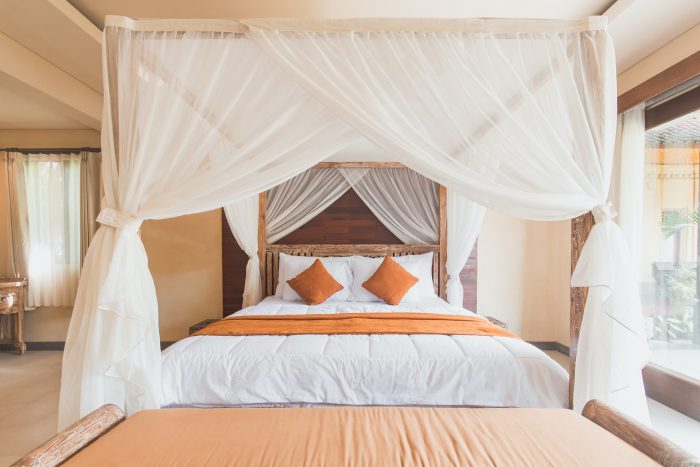
To get comfortable sleep, it's essential to pay attention not only to temperature but also to humidity.
Various humidity problems can lead to difficulty sleeping due to damp bedding at night, or shallow sleep due to a dry throat or nose. Especially in humid summer, you tend to be more affected.
The ideal indoor humidity is 40-60%, but humidity tends to be high in summer and low in winter, making it difficult to maintain.
Since the optimal humidity management methods differ by season—using the dehumidification function of the air conditioner in summer and a humidifier in winter—be careful.
If you can maintain indoor humidity at approximately 50% throughout the year, you can sleep in a comfortable environment. It is recommended to check and manage temperature and humidity as appropriate.
Summary: On tropical nights, make good use of air conditioning and bedding.

Did you understand how to use air conditioning and bedding to create the optimal sleeping environment during tropical nights when it's too hot to sleep?
By following a few tips and optimizing your sleep environment, you can sleep soundly and wake up refreshed in the morning.
Finally, let's review this article.
- Adjust the indoor environment to avoid overcooling your body.
- Changing bedding is also an option to support sound sleep.
- Air conditioner temperature should be around 27°C with a 2-hour timer.
- Ideal humidity is 40-60%.
- Direct the fan's breeze towards your feet, not your body.
To achieve comfortable and sound sleep, it's important not only to manage indoor temperature and humidity but also to choose bedding that suits you.
Make an effort to lead a comfortable sleep life by utilizing breathable pajamas and highly absorbent bedding sets.
Please achieve a sleep life where you can rest your body tired from the intense heat of the day.
We hope this article will be an opportunity for you to improve summer insomnia and create a sleep routine that allows you to wake up refreshed every morning.


